48 hr
Ban Gioc Waterfall & Angel Mountain 2-Day Adventure
- Expert local guide
- Small group
- Skip-the-line access
- Free cancellation
Ban Gioc Waterfall Day Trip from Hanoi — 2-Day Border Adventures
Vietnam's tallest cascade at the China frontier, paired with cave systems and highland villages
Compare fares, pick the fit — all bookings are mobile-voucher and eligible for free cancellation where shown.
48 hr
24 hr
48 hr
| Experience | Duration | Rating | Skip-the-line | Guide | Small group | Free cancel. | Price | |
|---|---|---|---|---|---|---|---|---|
|
Guided Experience
Most popular
Ban Gioc Waterfall & Angel Mountain 2-Day Adventure
|
48 hr | ★ 5.0 | ✓ | ✓ | ✓ | ✓ | €187 | Book → |
|
Guided Experience
Ban Gioc Waterfall & Cao Bang Villages: 2-Night Adventure from Hanoi
|
24 hr | ★ 4.9 | ✓ | ✓ | ✓ | ✓ | €130 | Book → |
|
Guided Experience
Ban Gioc Waterfall & Nguom Ngao Cave Adventure from Hanoi
|
48 hr | ★ 5.0 | ✓ | ✓ | ✓ | ✓ | €93 | Book → |
Worth it if you commit to overnight stays
A ban gioc waterfall day trip from hanoi is physically impossible — the 300 km distance and mountain roads require at least two days. The available tours confirm this reality: every option runs two or three days, pairing the falls with Nguom Ngao Cave or highland villages to justify the travel commitment. The 45,000 VND entrance fee is negligible; your real cost is time and tour pricing. What you get is Southeast Asia's largest waterfall — a 30-meter cascade split across the Vietnam-China border, framed by karst peaks and accessible via bamboo raft rides that bring you close to the thundering water. The cross-border scale and remote Cao Bang setting deliver a visual payoff that coastal waterfalls and northern highlands cannot match. For travelers who view Northern Vietnam beyond Hanoi and Ha Long as worth exploring, the overnight format works. For those seeking quick day-return landmarks, this destination does not fit your itinerary.
Bottom line: Ban gioc waterfall day trip from hanoi tours require overnight stays, but the scale and remoteness justify the extended format for travelers ready to venture deep into Cao Bang.
They complement each other; most visitors who do both call Ninh Binh the more accessible landmark, while a ban gioc waterfall day trip from hanoi offers a more rugged, remote adventure.
|
Top pick Ban Gioc Waterfall |
Ninh Binh | |
|---|---|---|
| Travel time from Hanoi | 6–7 hours each way | |
| Landscape style | Limestone border waterfall | |
| Transit intensity | High (mountain roads) | |
| Best duration | 2–3 days | |
| Cultural focus | Ethnic minority villages | |
| Typical price | Varies (see tour grid) | |
| See tickets & prices |
Verdict: Choose Ban Gioc Waterfall if you seek a remote, off-the-beaten-path border experience, or Ninh Binh if you prioritize travel efficiency and iconic limestone scenery for your ban gioc waterfall day trip from hanoi tours.
Hand-picked experiences loved by thousands of travelers
2 days
Free Cancellation
Discover Vietnam's stunning Ban Gioc Waterfall, explore Tiger Cave, and visit ethnic villages on this guided overnight adventure.
2 days
Free Cancellation
Discover Vietnam's stunning northern highlands with visits to a majestic waterfall, limestone caves, and mountain viewpoints
3 days
Free Cancellation
Explore northern Vietnam's dramatic landscapes with Ban Gioc Waterfall, Nguom Ngao Cave, and winding mountain roads
3 days
Free Cancellation
Explore remote northern Vietnam with stays in local homestays, dramatic waterfalls, and pristine lakes
3 days
Free Cancellation
Discover Northeast Vietnam's natural wonders on this private three-day escape from Hanoi
12 hours
Free Cancellation
Explore Vietnam's stunning northern highlands with local ethnic minority guides in your own private vehicle
Purchase your entrance tickets at the main gate.
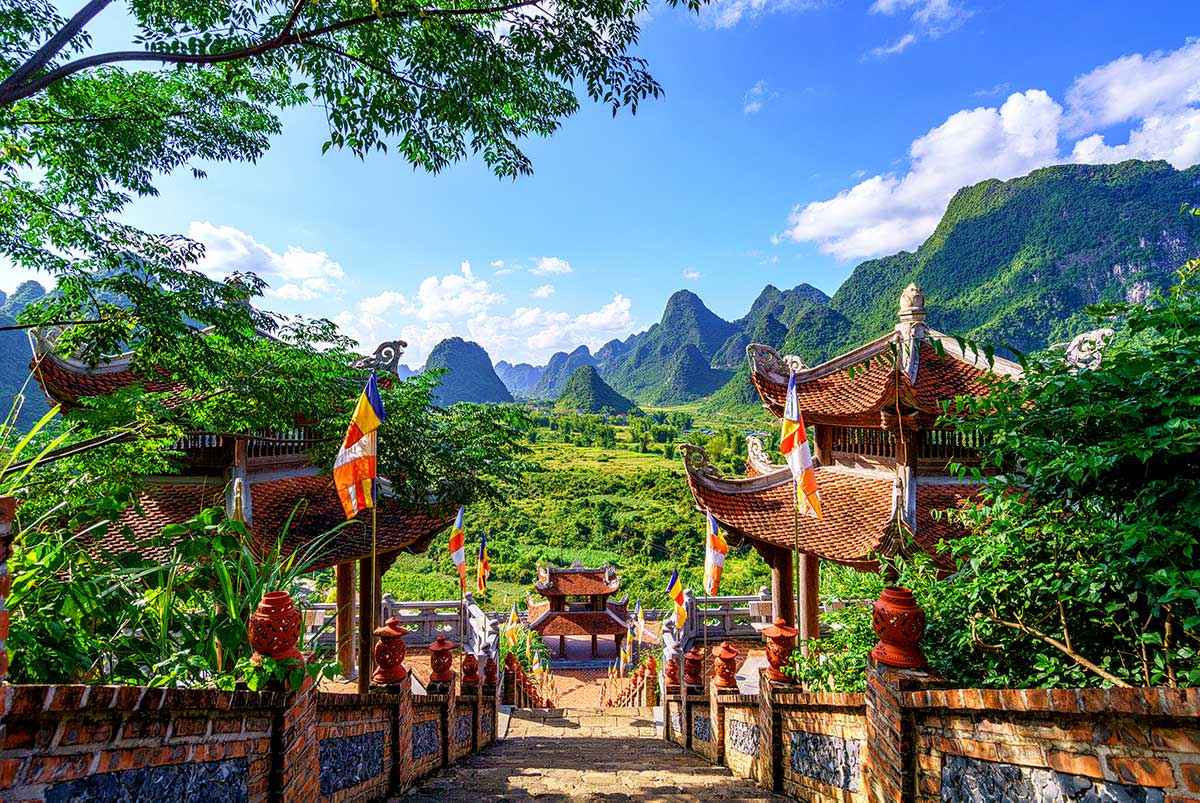
Walk the paved path to the main waterfall viewpoint.
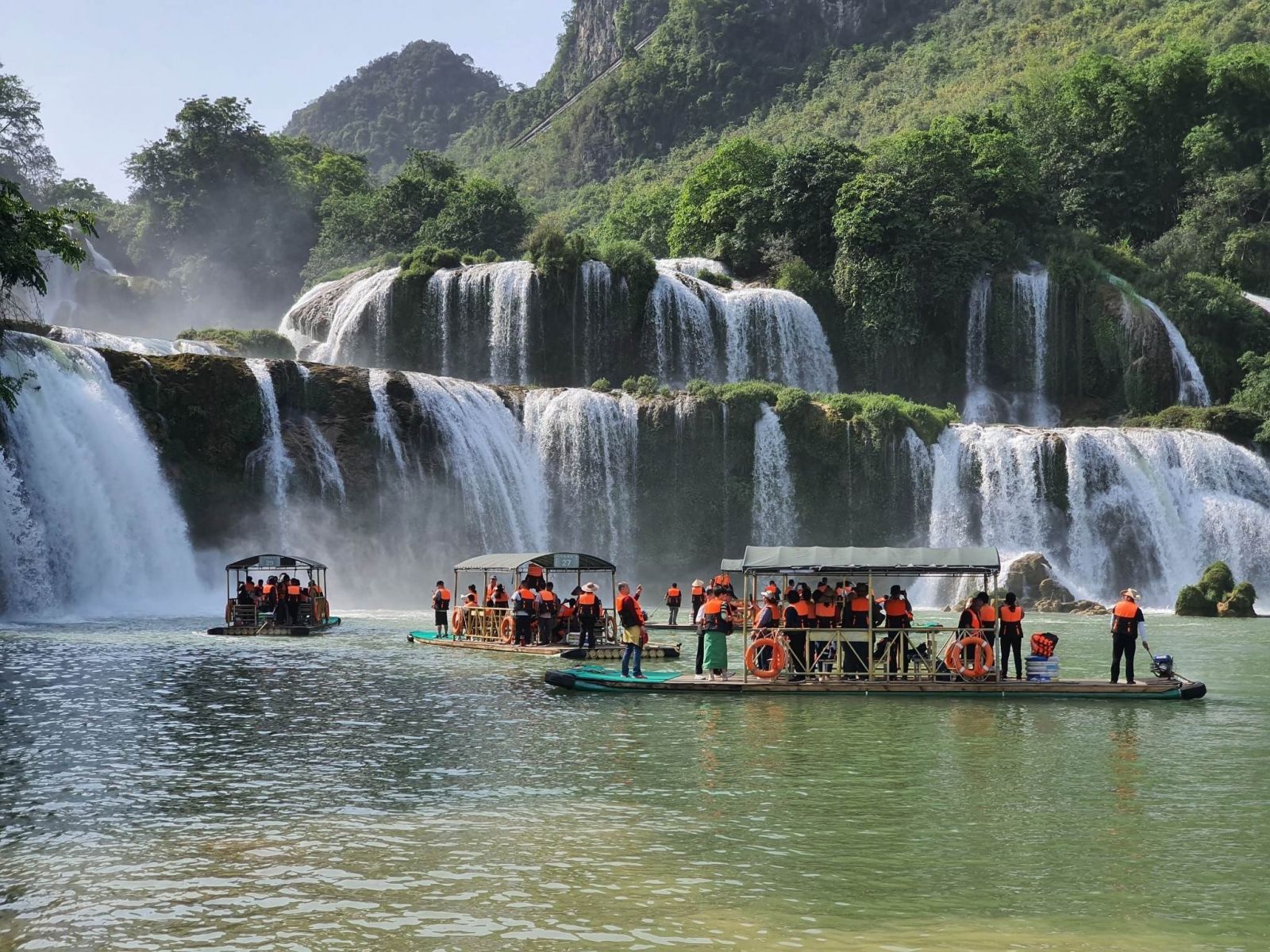
Take a local raft ride to the base of the cascade.
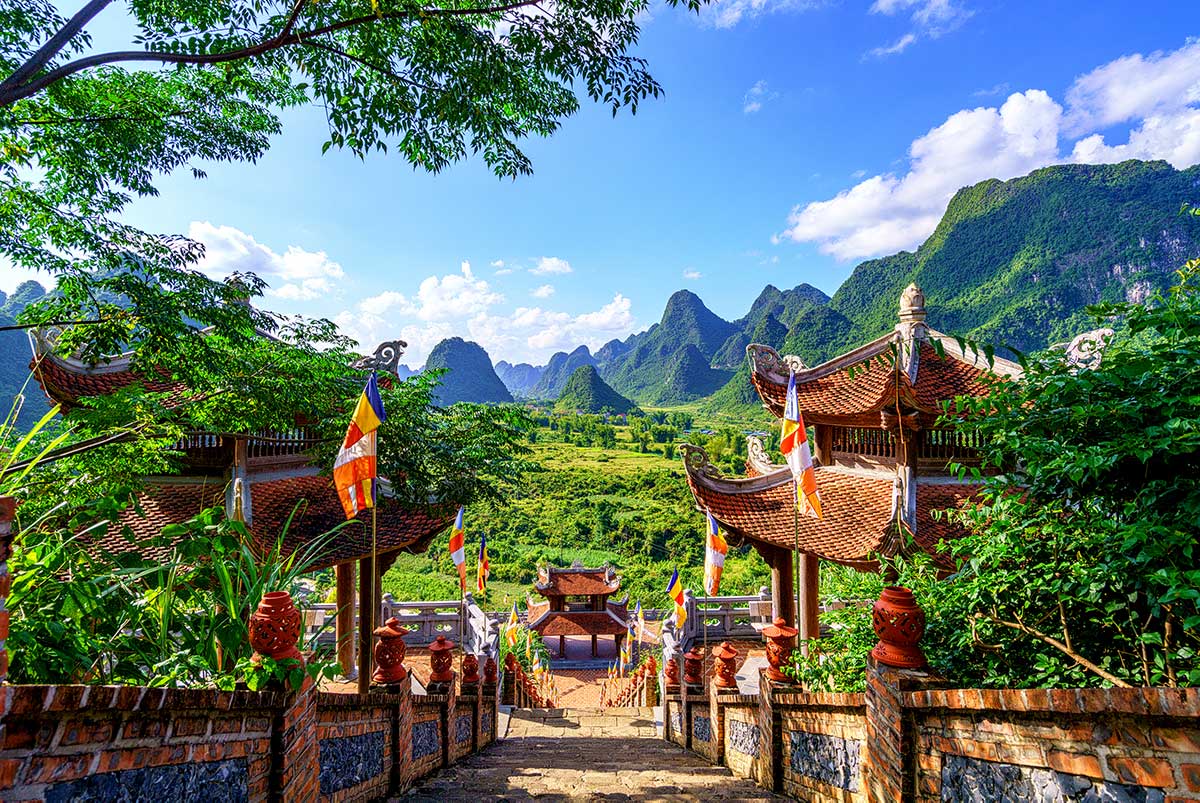
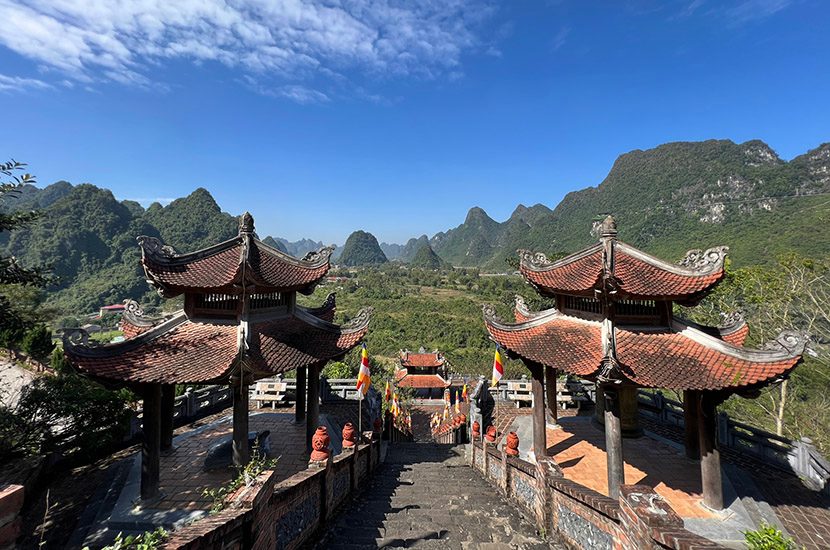
Climb to the Phat Tich Truc Lam Ban Gioc Pagoda.
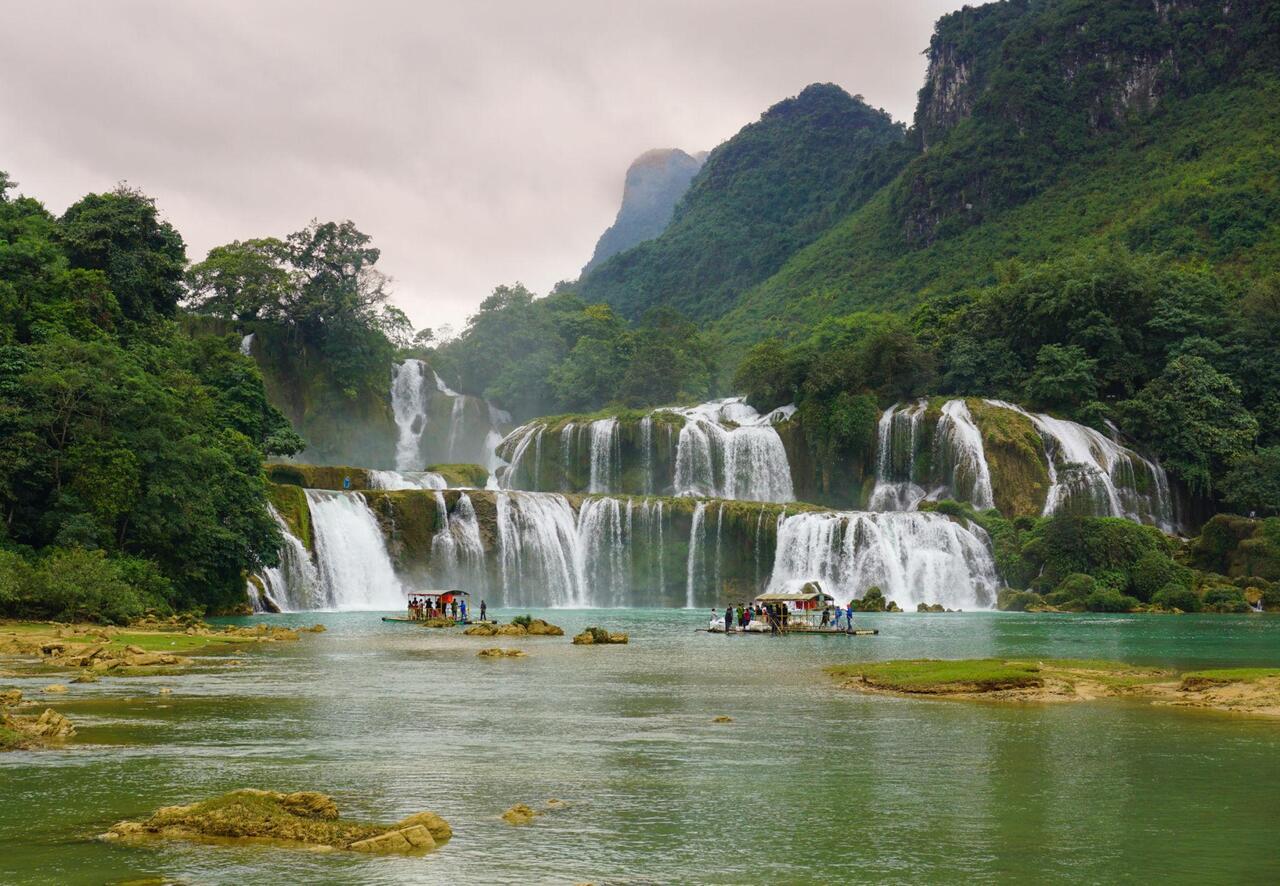
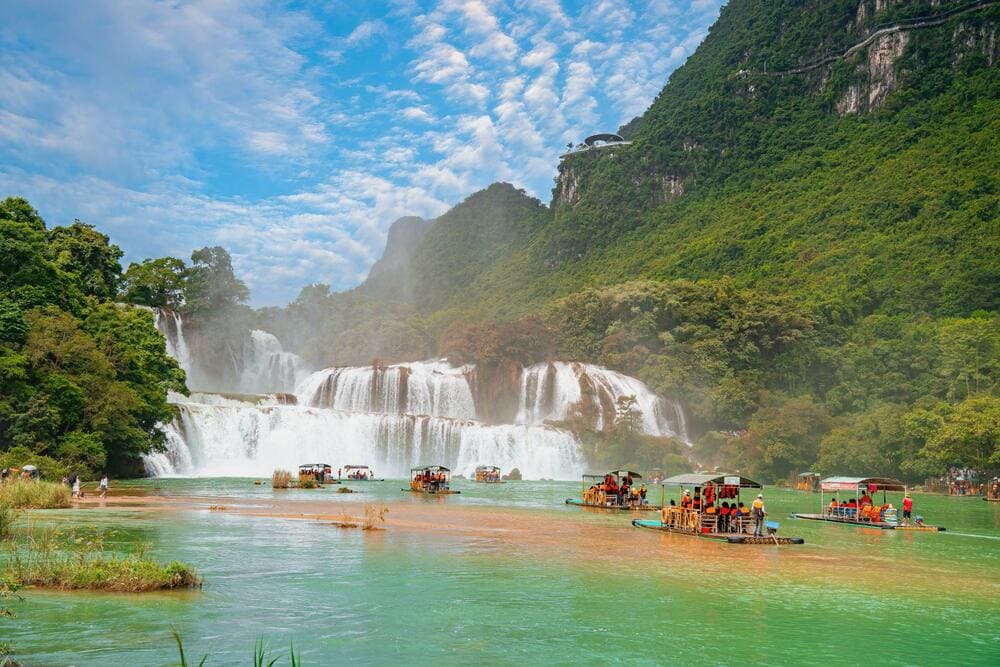
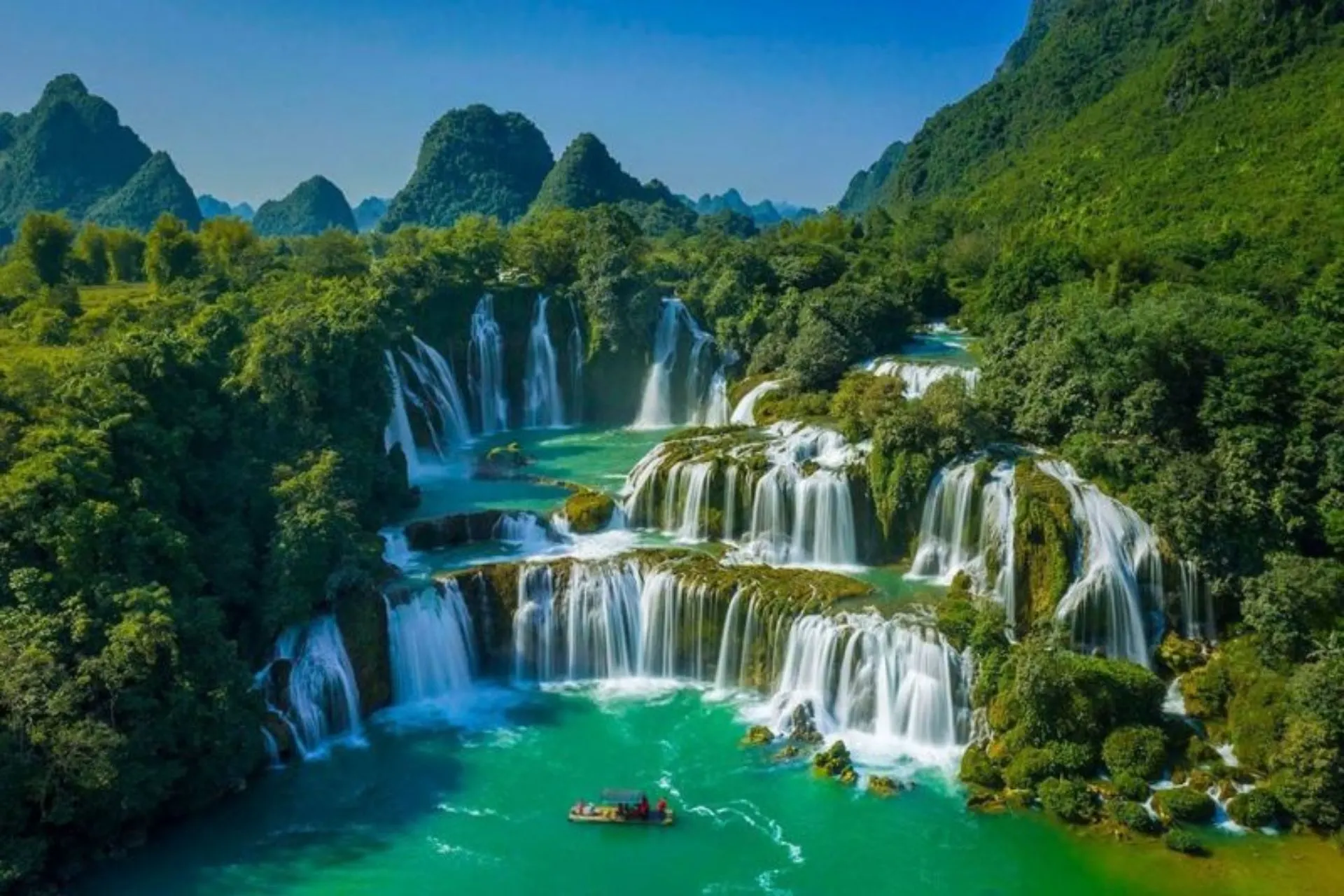
The primary drop of the waterfall is 30 metres high and creates a thunderous roar.
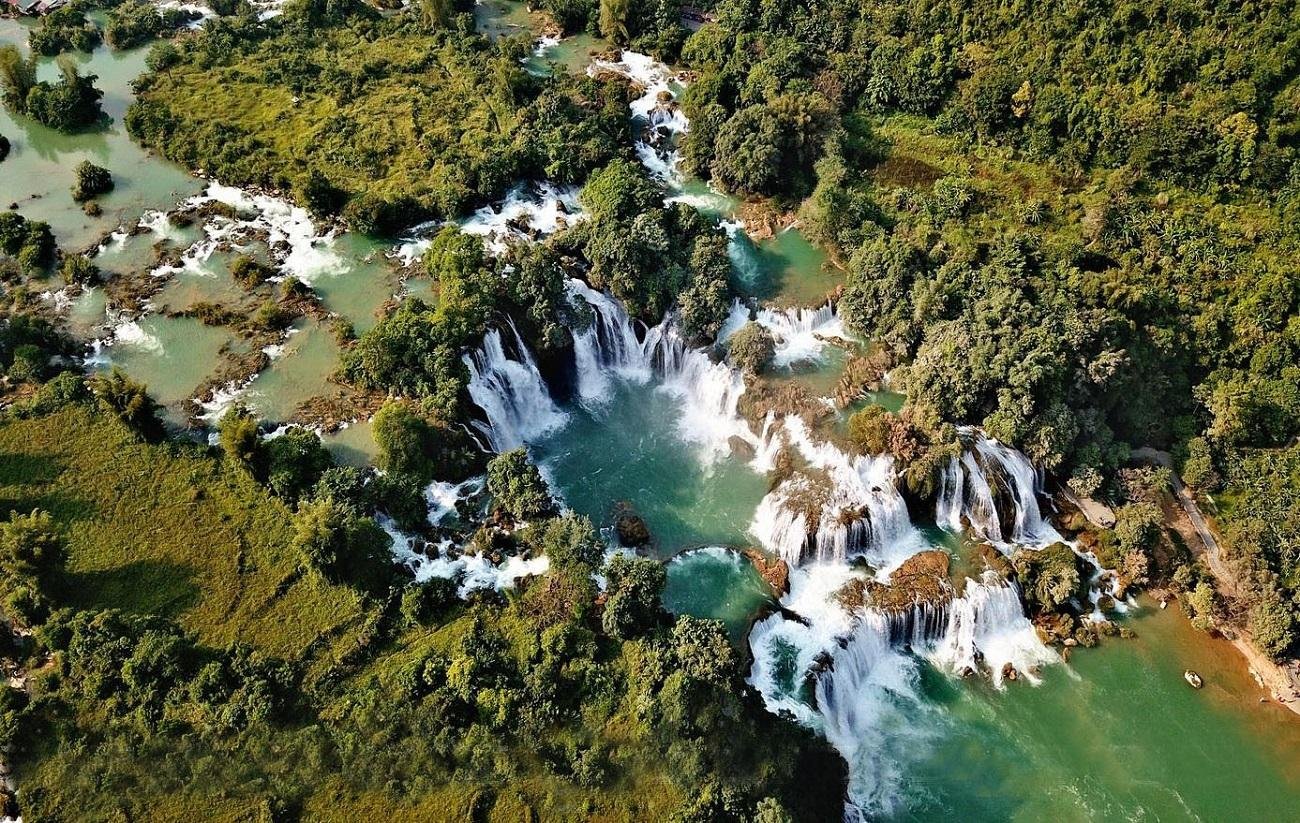
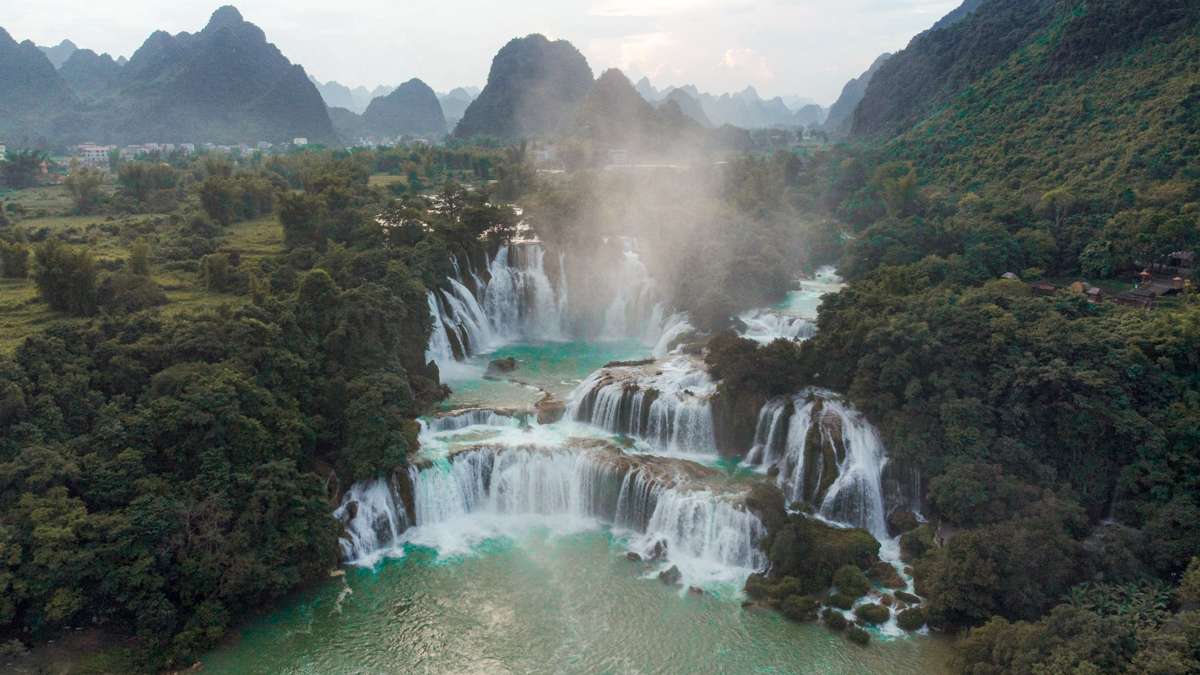
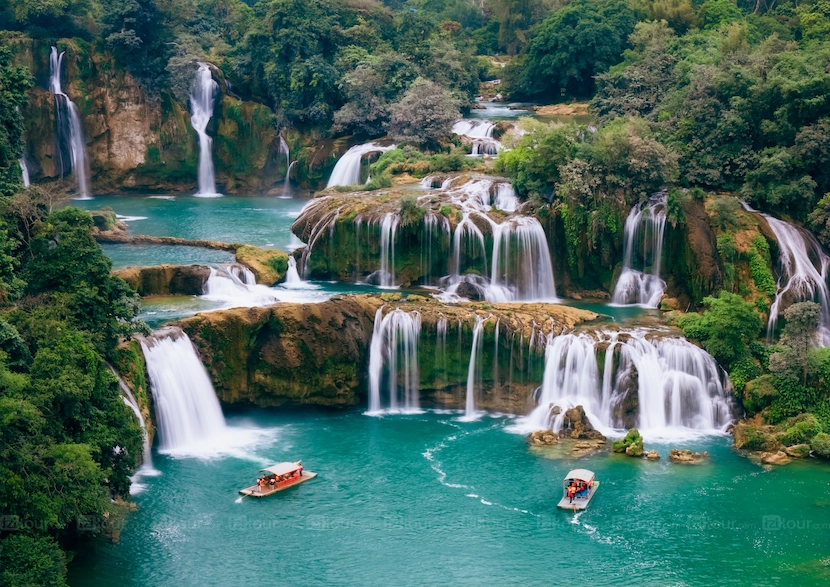
Gentle, multi-threaded flows that weave through the limestone karst landscape.
A tranquil pagoda providing a panoramic view of the entire waterfall valley.
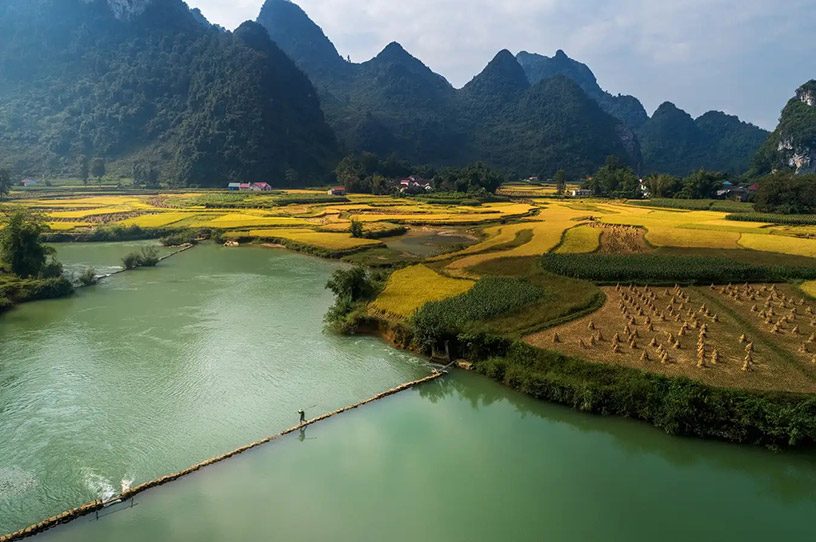
The jade-blue river that marks the international border and feeds the falls.
You depart Hanoi before sunrise, crossing the Red River Delta as streetlight gives way to terraced hills. By mid-morning the highway narrows into Cao Bang's limestone karst, where Nung villages cling to valley sides and buffalo graze on roadside grass.
The drive takes seven hours with a lunch stop in Bac Kan Province, where you stretch beside a reservoir before the final push north.
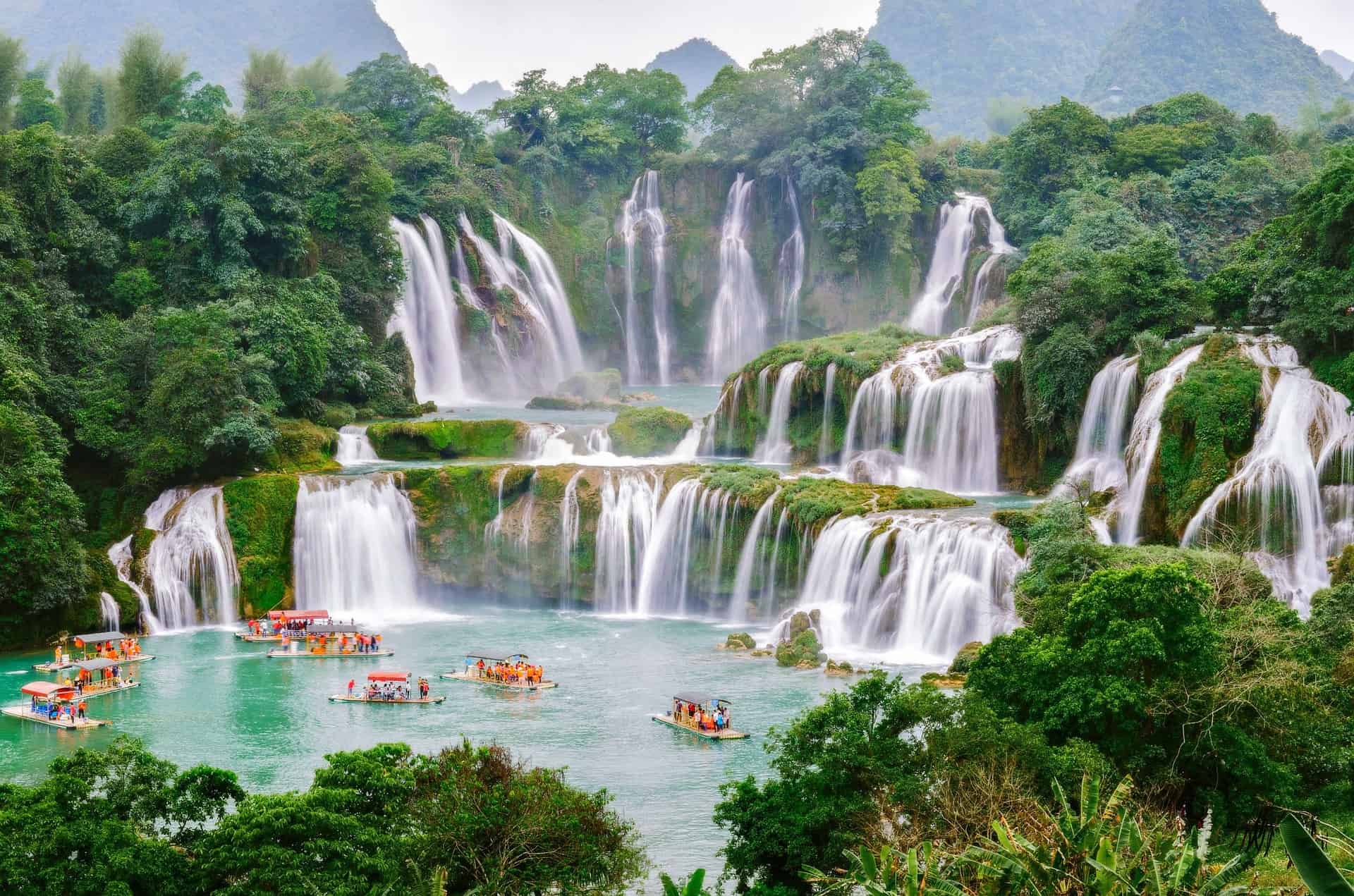
You arrive at Dam Thuy Commune by early afternoon, the roar of water audible before the falls come into view. A paved path leads 400 metres to the viewing platform, where the triple cascade fills your sightline—monsoon flow sending spray across the bamboo rail. You can hire a raft to the base pools or walk the eastern bank trail for side-angle perspectives, the Chinese mountainside rising sheer across the river channel.
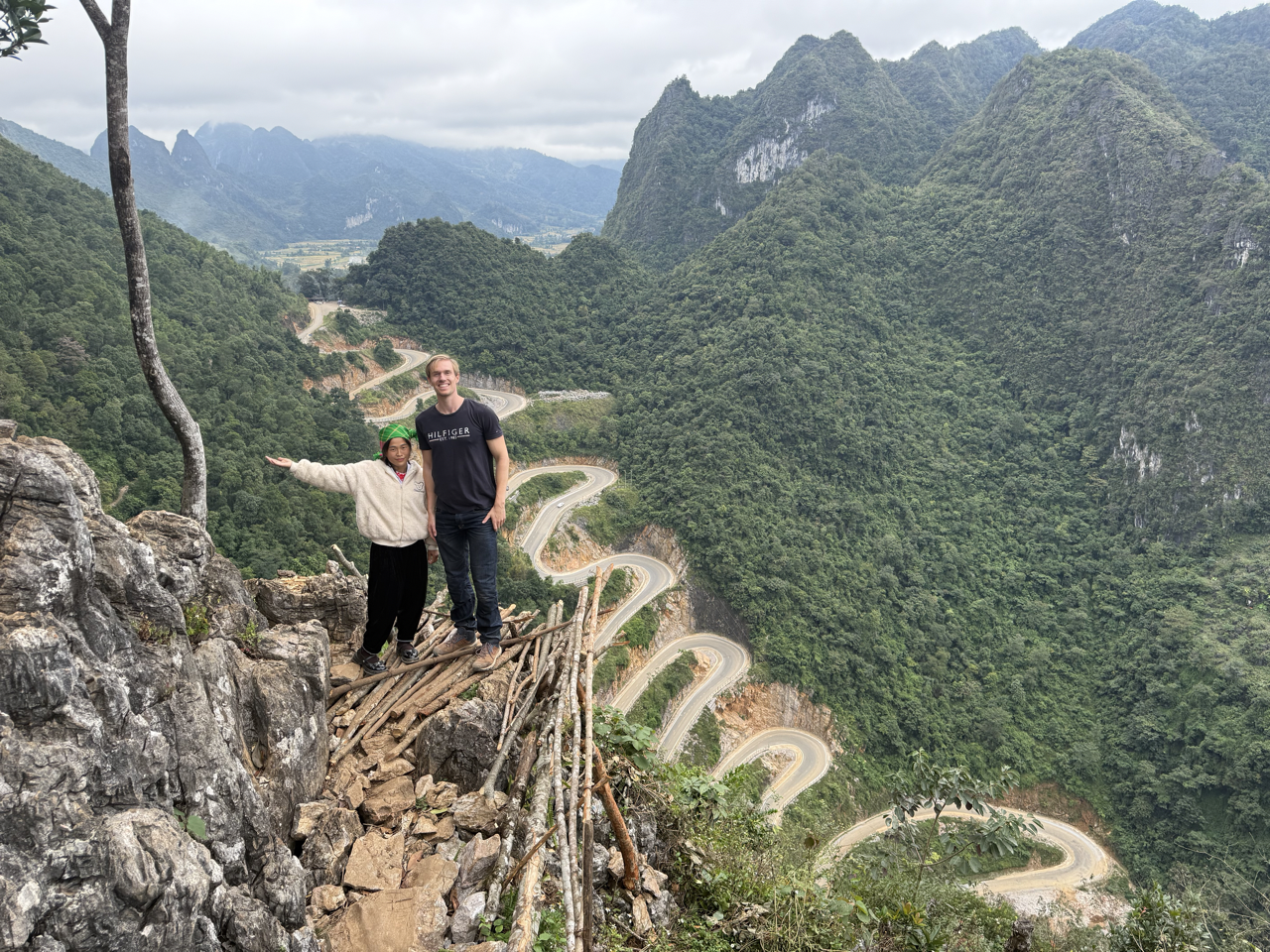
If your itinerary includes Angel Mountain, you tackle the climb at dawn the next morning, fixed ropes guiding the last scramble to the summit. From 100 metres up, the waterfall spreads below in full geometry, morning mist threading the rock shelves. You descend for breakfast in the village before departing south toward Nguom Ngao Cave, where underground rivers and column forests fill the afternoon before the return leg to Hanoi.
All the details about your upcoming adventure in one place
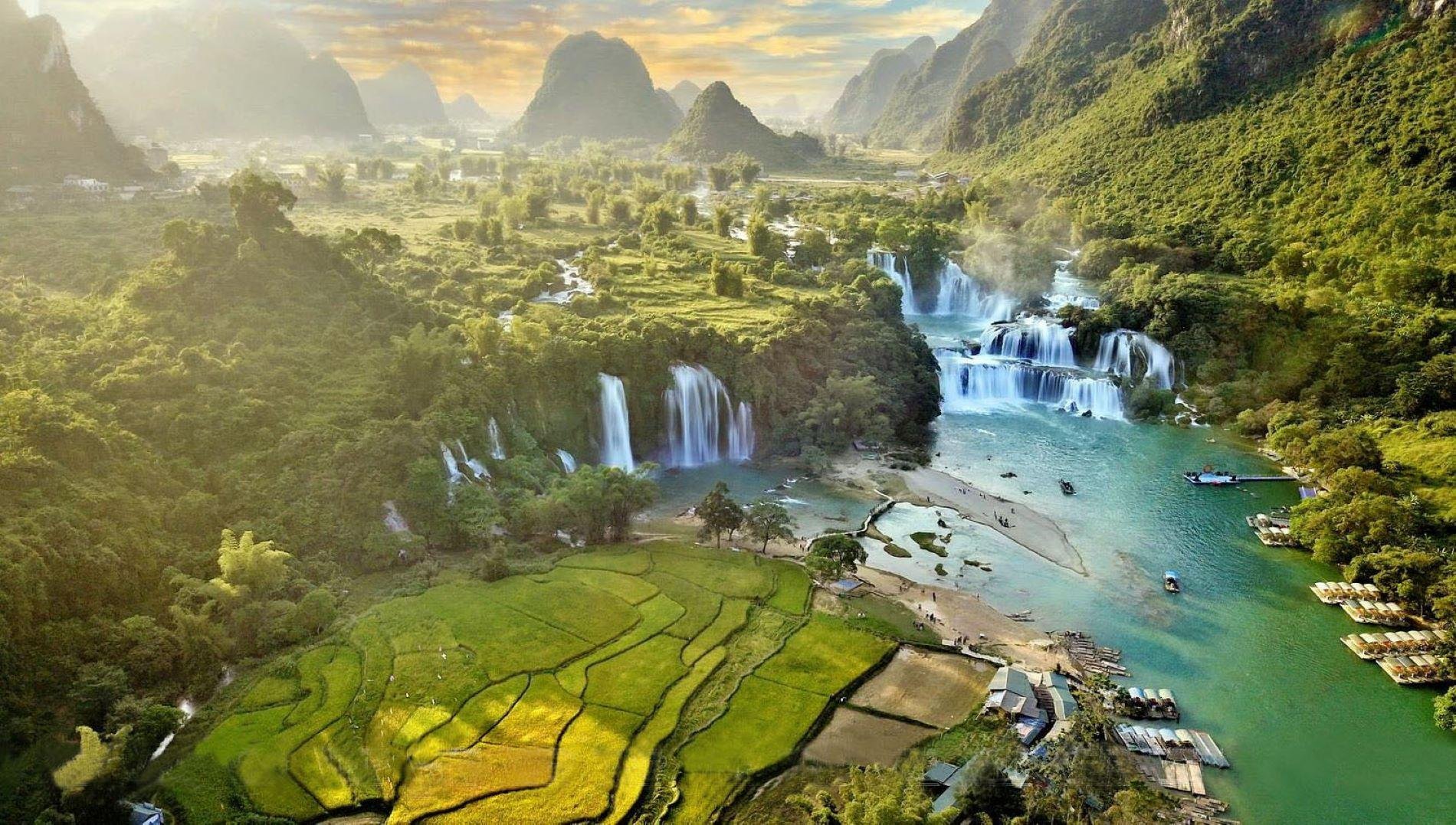
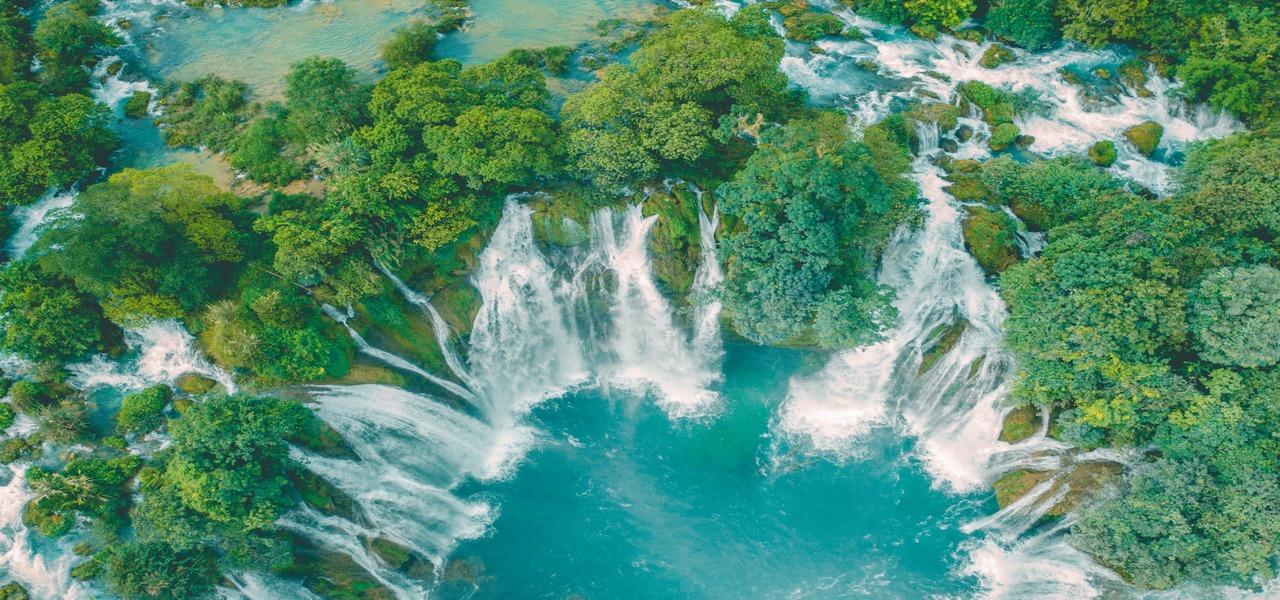
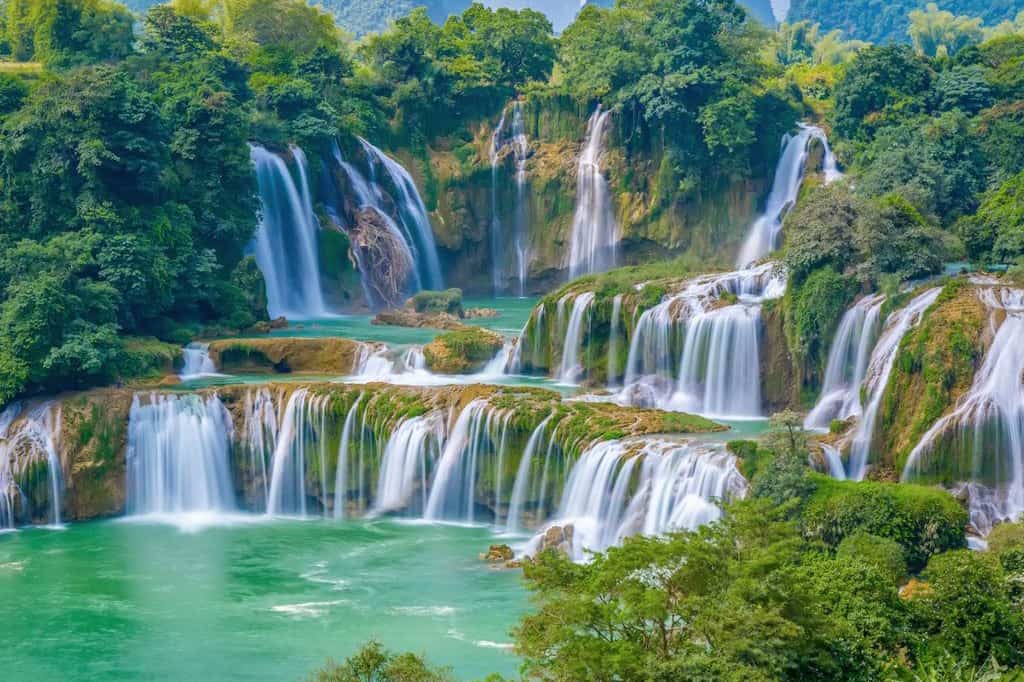
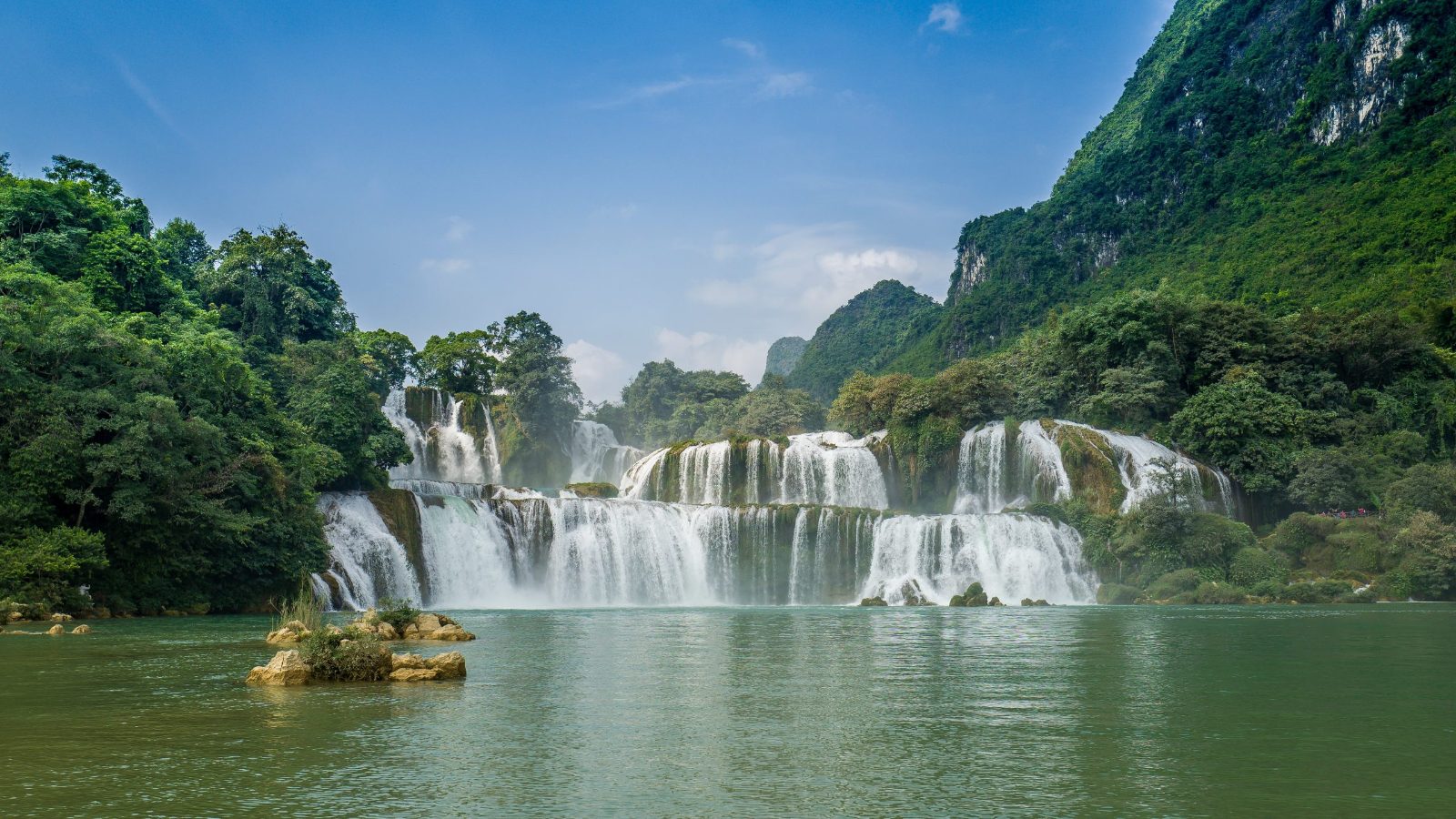
Ban Gioc Waterfall divides two nations along a 300-metre-wide basalt curtain where the Quay Son River splits into three cascades totaling 30 metres in vertical drop.
The falls mark the northernmost point of accessible terrain in Cao Bang Province, seven hours by road from Hanoi, with the left half belonging to China's Guangxi region and the right to Vietnam's Trung Khanh District. French colonial surveyors documented the site in 1904, but local Tay and Nung communities had harvested bamboo and fished the plunge pools for centuries before cartographic claims arrived.
Geological surveys confirm the basalt plateau dates to Permian volcanic activity 260 million years ago, creating the layered rock shelves that now channel monsoon runoff into tiered curtains. Peak flow occurs June through September when the Quay Son swells to 1,200 cubic metres per second, turning the jade-green dry-season trickle into a thundering wall visible from Dam Thuy village two kilometres downstream. Seasonal bamboo rafts operated by Tay families ferry visitors to the base during low-water months, though the 45,000 VND conservation fee applies whether you wade or photograph from the Vietnamese bank.
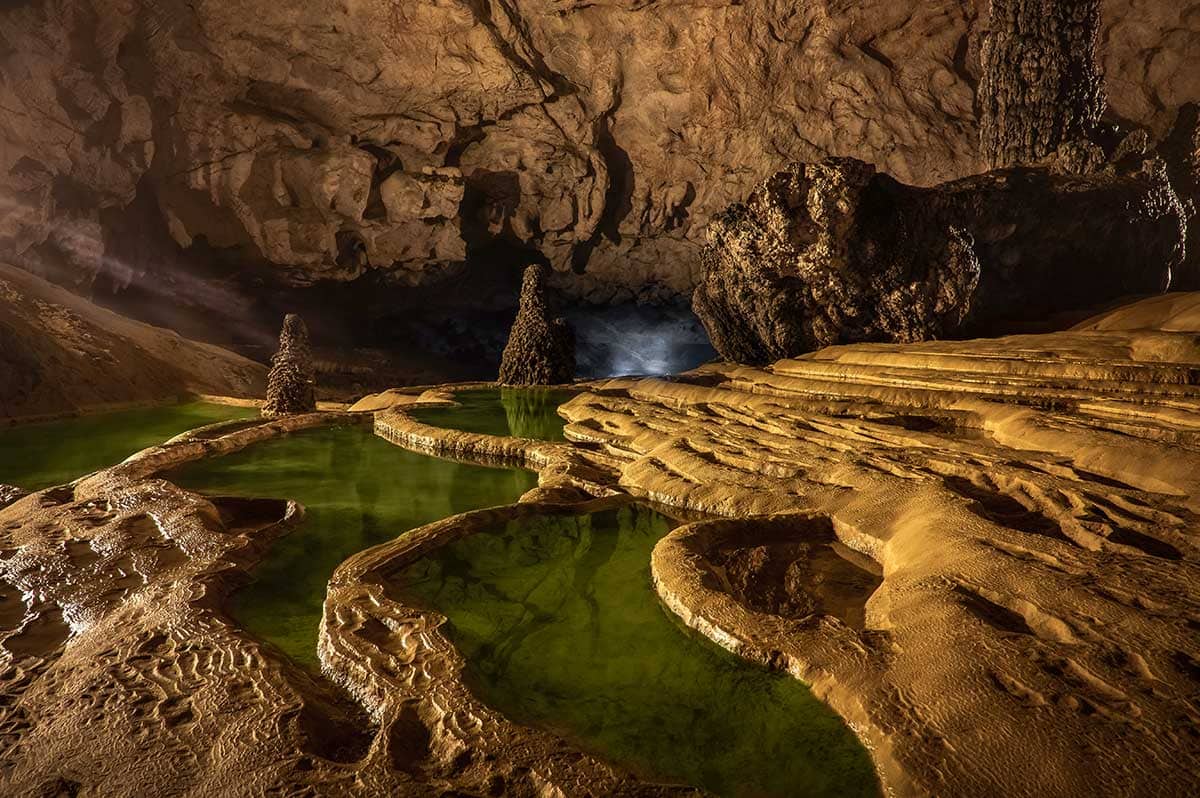
The waterfall anchors a geological corridor that includes Nguom Ngao Cave, a three-kilometre limestone labyrinth 90 kilometres south, and Thang Hen Lake, a collapsed karst sinkhole system framed by primary forest. Multi-day itineraries from Hanoi typically pair the falls with these underground chambers, where stalactite formations reach eight metres and Pac Bo Cave shelters the site where Ho Chi Minh planned early resistance operations in 1941. Ban Gioc waterfall day trip from Hanoi packages now dominate weekend traffic from the capital, with two-day formats offering the only practical access given the 340-kilometre drive each way.
Angel Mountain, a 100-metre limestone pinnacle five kilometres west of the falls, provides the sole elevated vantage over the tri-cascade system, though the final 200-metre ascent requires fixed ropes and dry conditions. The mountain's Vietnamese name, Nui Thung, translates to "barrel peak" for its cylindrical profile. Local Nung guides lead pre-dawn climbs timed to catch first light on the mist rising from the plunge pools, a 90-minute round trip that most Ban Gioc waterfall day trip from Hanoi tours include as an optional dawn extension.
The 300-metre basalt curtain divides two nations, its tiered cascades marking where monsoon water becomes border geography.
Modest clothing is recommended, particularly if visiting nearby pagodas. Wear comfortable walking shoes for the riverbank paths.
Security patrols the border area. Keep your passport and identification documents readily accessible for inspection at any time.
Photography is permitted, but avoid using drones, as flying them near the international border is strictly prohibited.
Families are welcome, but maintain close supervision of children near the riverbanks. The site is suitable for children of all ages.
The main viewing platforms and riverbanks are accessible via gravel and paved paths. Mobility assistance is not provided on-site.
Small eateries operate near the parking area. Visitors may bring light snacks, but please dispose of all waste in designated bins.
Opening hours
07:00–18:00
Address
Dam Thuy Commune, Trung Khanh District, Cao Bang Province, Vietnam
Accessibility
Flat pathways lead from the entrance to the falls, though some areas have natural terrain.
Best arrival
07:00–09:00 — avoid midday crowds and secure the best morning light for photography
Storage
Limited lockers; carry minimal gear for your ban gioc waterfall day trip from hanoi
Car · 8 hours · Varies by provider
Private transfers provide the most reliable timing for a ban gioc waterfall day trip from hanoi.
Public transport · 10+ hours · Budget-friendly
Buses from Hanoi to Cao Bang, then local transport to the falls.
Ticket purchases are final upon entry. The 45,000 VND conservation fee is non-refundable.
Recommended time
2-3 hours
A well-paced ban gioc waterfall day trip from hanoi typically requires two to three hours to explore the limestone karsts and river basin. Planning your visit for the 07:00–09:00 arrival window allows you to navigate the karst landscape before peak bus traffic arrives. While ban gioc waterfall day trip from hanoi tours often include boat access, securing your ban gioc waterfall day trip from hanoi tickets early helps mitigate wait times at the bamboo raft docks.
Crowd levels through the day
Weather · crowds · average price — dots go green to amber to red as each metric rises.
Flowers bloom and water flow is calm and turquoise.
Expect powerful waterfall volume and lush green surroundings.
September–October offers the most balanced weather and flow.
Misty atmosphere and cooler temperatures for travel.
Aim for the 07:00–09:00 arrival window to see the best light and avoid crowds.
Stay clearly on the Vietnamese side of the Quay Son River to avoid legal issues.
Only local currency (VND) is accepted for the 45,000 VND conservation fee and other services.
A ban gioc waterfall day trip from hanoi is a long journey, so bring adequate supplies for the road.
October features cultural festivals which may affect local traffic flow.
Ban Gioc Waterfall sits on the Quay Son River, which has carved the limestone karst between Vietnam and China for millennia. Local Tay and Nung communities knew the falls as Pác Bó, a name tied to watershed spirits in regional folklore. The border remained porous until French colonial surveyors mapped Cao Bang Province in the 1880s and fixed the international line directly through the cascade. By 1954, the Geneva Accords formalized the frontier, splitting the waterfall between two nations and restricting access for decades. During the 1979 Sino-Vietnamese conflict, artillery positions ringed the gorge and the falls became a strategic no-go zone. Villagers in Dam Thuy Commune were evacuated, and the site vanished from official maps. Normalization talks in the early 1990s reopened the border crossing at Tra Linh, ten kilometers downstream. In 1999, a provincial decree designated the waterfall a protected landscape, and workers built the first gravel track from Cao Bang city. Early visitors on ban gioc waterfall day trip from hanoi faced nine-hour drives on unfinished roads. Pavement reached the site in 2006, cutting transit time and drawing backpackers who camped near Nguom Ngao Cave. The conservation fee of 45,000 VND was introduced in 2012 to fund erosion control after monsoon floods undercut the viewing platforms. A bamboo raft concession launched in 2014, fermented by former fishermen who lost river access when the border fence went up. Today the falls anchor a cross-border tourism corridor, with Vietnamese and Chinese visitors crossing at designated viewpoints. The Quay Son still floods each September, reshaping the lower tier and depositing sediment that keeps the plunge pools shallow and safe for wading.
French surveyors map the Quay Son gorge and establish the colonial border through the waterfall.
Geneva Accords formalize the Vietnam-China frontier, bisecting the cascade and restricting civilian access.
Sino-Vietnamese conflict closes the site; military installations ring the falls and villagers are evacuated.
Cao Bang Province designates Ban Gioc a protected landscape and constructs the first vehicle track from the provincial capital.
Paved highway completion reduces ban gioc waterfall day trip from hanoi travel time and opens the site to tour operators.
Conservation fee of 45,000 VND introduced to fund platform repairs after monsoon erosion damage.
Bamboo raft tours begin, operated by former fishermen displaced by border-fence construction.
Position yourself on the flat-bottomed bamboo rafts for a low-angle perspective of the cascading limestone tiers. This perspective captures the scale of the water flow directly from the river level.;Before 09:00
Located along the concrete path, this vantage point offers an unobstructed frontal view of the entire waterfall structure. It is the primary location for a ban gioc waterfall day trip from hanoi to photograph the border demarcation scenery.;Before 09:00
Walk the path leading toward the higher limestone sections to isolate individual streams of the waterfall against the lush karst backdrop. This area provides a vertical composition different from the wide landscape shots.;Before 09:00
Standing on the Vietnam side of the river before reaching the central plaza allows for a shot that includes the greenery and the flowing Quay Son water. Many ban gioc waterfall day trip from hanoi tours recommend this spot for a balanced landscape composition.;Before 09:00
Planning a ban gioc waterfall day trip from hanoi requires careful preparation due to the long travel distance and rugged terrain. While the natural limestone landscape is impressive for older children, families should manage expectations regarding accessibility and transit time when considering various ban gioc waterfall day trip from hanoi tours.
The uneven riverbank paths and rocky terrain make strollers impractical for this excursion, so parents should bring a reliable baby carrier instead.
There are no dedicated baby-change facilities on-site, and public restroom conditions can be basic, so families should pack extra supplies.
This journey is most suitable for school-aged children who can handle the extended driving time, as a typical ban gioc waterfall day trip from hanoi tour involves significant time on the road.
To maximize your experience, arrive within the best arrival window of 07:00–09:00 to avoid midday crowds and secure the best morning light for photography.
On-site dining options are limited, so bringing packed snacks and water is recommended for children who are picky eaters.
Given the long transit, booking high-speed transport options is helpful for those holding ban gioc waterfall day trip from hanoi tickets who need to balance activity with rest.
Dining options near the falls are limited to riverside establishments serving regional specialties, making them practical for a ban gioc waterfall day trip from hanoi. Visitors planning a ban gioc waterfall day trip from hanoi tour will find these venues located within Dam Thuy Commune, Trung Khanh District, Cao Bang Province, Vietnam, perfect for a quick meal before exploring the karst landscape.
Located near the falls, this spot offers traditional Cao Bang dishes like roasted duck and river fish. It serves as a convenient stop for those on ban gioc waterfall day trip from hanoi tickets wanting a hot meal with a view.;Nha Hang Quay Son
Everything you need to know for your journey
Ban Gioc Waterfall is open daily from 07:00–18:00.
The entrance fee is 45,000 VND per person.
Swimming is strictly prohibited due to safety and border regulations at Ban Gioc Waterfall.
The site is family-friendly, with walking paths accessible to visitors of most ages at Ban Gioc Waterfall.
The best arrival window is 07:00–09:00 to avoid crowds and enjoy the best light.
Drones are strictly prohibited at Ban Gioc Waterfall due to its location on the international border.
Ban Gioc Waterfall is located in Dam Thuy Commune, Trung Khanh District, Cao Bang Province.
Only cash is accepted for the 45,000 VND entrance fee at Ban Gioc Waterfall.
We recommend dedicating at least 2–3 hours at the site during your ban gioc waterfall day trip from hanoi.
Explore a massive limestone cave system with impressive stalactites.
A serene temple overlooking the entire waterfall basin.
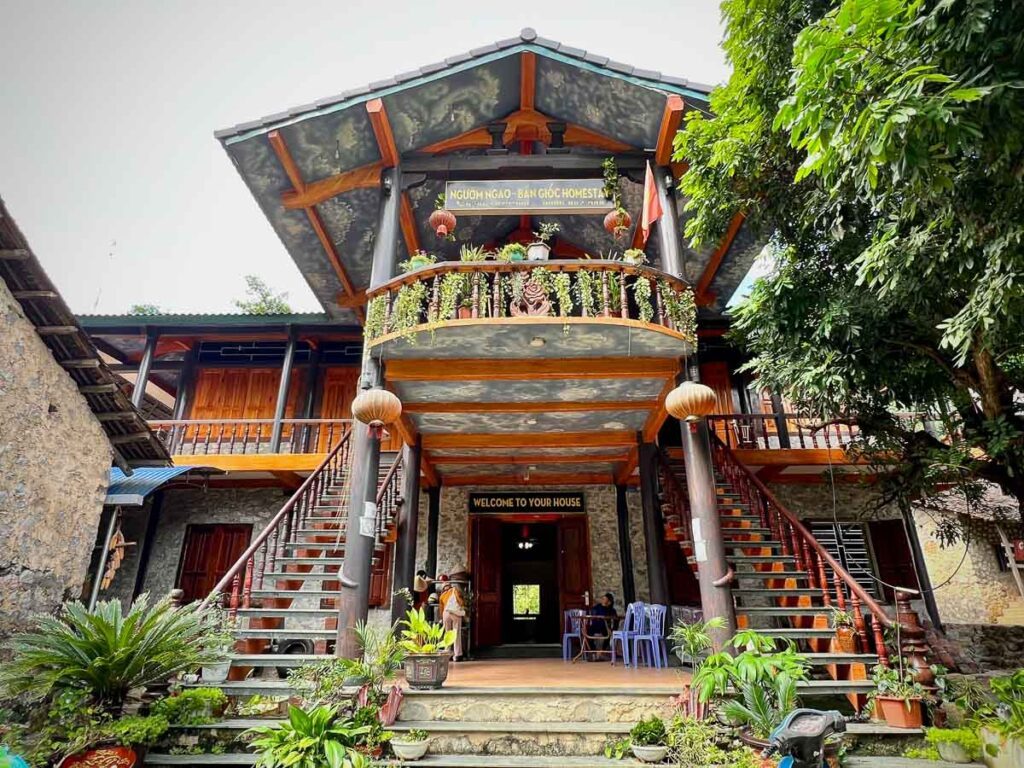
Local family-run stays near the waterfall.
Standard hotel accommodation in the nearby district.
Join thousands of happy travelers who have discovered this incredible experience
Book Your Experience Now